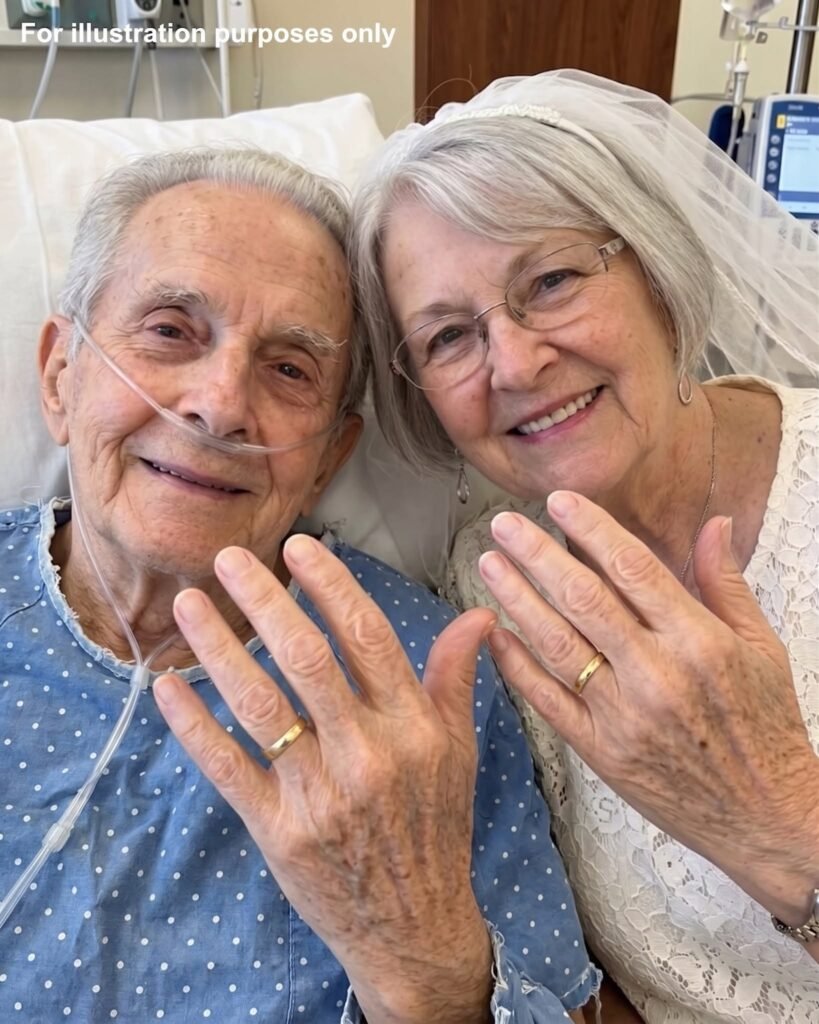
At 73, I married the dying man I had loved since high school because he said it was his final wish. One month later, at his funeral, my only living relative leaned close and whispered, “YOU WALKED RIGHT INTO HIS TRAP.”
The Boy at the Bus Station
The rain had been falling since before sunrise, turning the streets outside my apartment into long ribbons of gray.
I sat beside the window with both hands wrapped around a chipped mug of instant coffee, listening to water tap against the glass. At seventy-three, I had somehow ended up back in the same little town I had left when I was seventeen.
The buildings had changed.
The old movie theater had become a pharmacy. The bakery where my mother used to buy cinnamon rolls was now a real estate office. Even the bus station had been torn down and replaced with a parking lot.
But some mornings, when the rain smelled a certain way, I could still see the town as it had been fifty-six years earlier.
And I could still see Calvin standing beside that bus.
“Please stay, Joanna,” he had begged.
We were seventeen, too young to understand how long a lifetime could be.
I had earned a place at a nursing college three hours away. Calvin had promised his father he would remain in town and help run the family hardware store.
Neither of us knew how to bend without breaking.
“I have to go,” I told him. “I worked too hard for this.”
“Then let me come with you.”
“You can’t leave your family.”
“And you can’t leave me?”
I kissed him before climbing onto the bus.
I believed we would write. I believed we would find our way back to each other once I finished school.
But pride is a quiet, stubborn thing.
One week became one month. One month became a year. Letters were written and thrown away. Phone calls were imagined but never made.
Eventually, Calvin became the name I avoided saying aloud.
I built a life in another city. I worked night shifts, holiday shifts, and double shifts. I cared for newborns, accident victims, frightened parents, and people facing their final hours.
There were men along the way.
Some were kind. A few asked me to marry them.
But whenever I imagined standing beside them at an altar, I saw a seventeen-year-old boy waiting beside a bus with rain in his hair.
So I remained alone.
When I finally retired, I discovered that my pension did not stretch nearly as far as I had expected. I returned to my hometown because the rent was cheaper, then pinned my old nursing badge onto a new white uniform and accepted a part-time position at the local hospital.
It was not the peaceful retirement I had imagined.
Still, I was managing.
That was what I told my cousin Russell every time he called.
Russell and I had barely spoken in thirty years. Yet as soon as he learned I had returned, he began calling every week.
“How are you doing in that apartment?” he asked one morning. “The rent must be terrible.”
“I’m fine.”
“Are you sure? A woman your age shouldn’t be handling everything alone.”
“I’ve handled things alone for most of my life.”
He laughed as though I had made a joke.
Then his questions began.
Had I updated my will? Which bank did I use? Did I keep important documents at home? Had I named anyone to make decisions for me if I became ill?
“You worry too much,” I told him.
“I’m family, Joanna. Who else is going to worry about you?”
Something in his voice made me uncomfortable.
Russell repeatedly mentioned our late Aunt June, who had spent her final years alone.
“I helped her with everything,” he said proudly. “Her accounts, her bills, her paperwork. She would’ve been lost without me.”
Aunt June had died with almost nothing, although everyone in the family believed she had inherited money from her husband.
At the time, no one questioned it.
Sitting in my apartment with Russell pressing me about my finances, I suddenly wondered why.
“I have to get ready for work,” I said.
“Think about what I told you. You should put someone responsible in charge of your affairs.”
“I’ll think about it.”
I hung up without saying goodbye.
